Neervanna Perumal Temple, Thiruneermalai
Thiruneermalai (Toyagiri Kshetram)
Salemjones · CC BY-SA 4.0 · source
A rare Divya Desam where Vishnu is worshipped in all four postures; one of the eight self-manifested Kshetrams.
Sthala Purāṇam
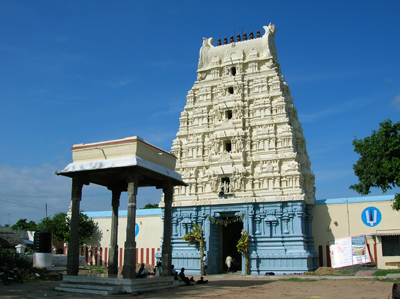
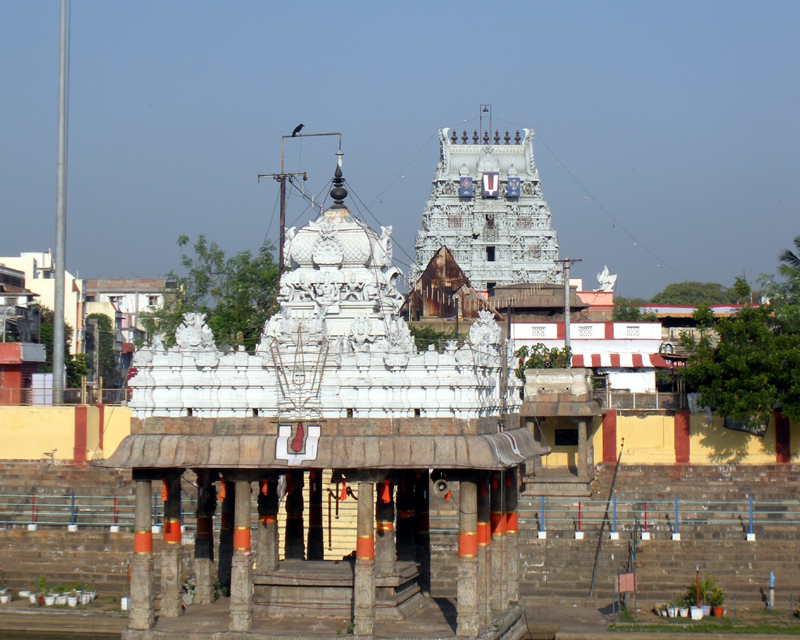
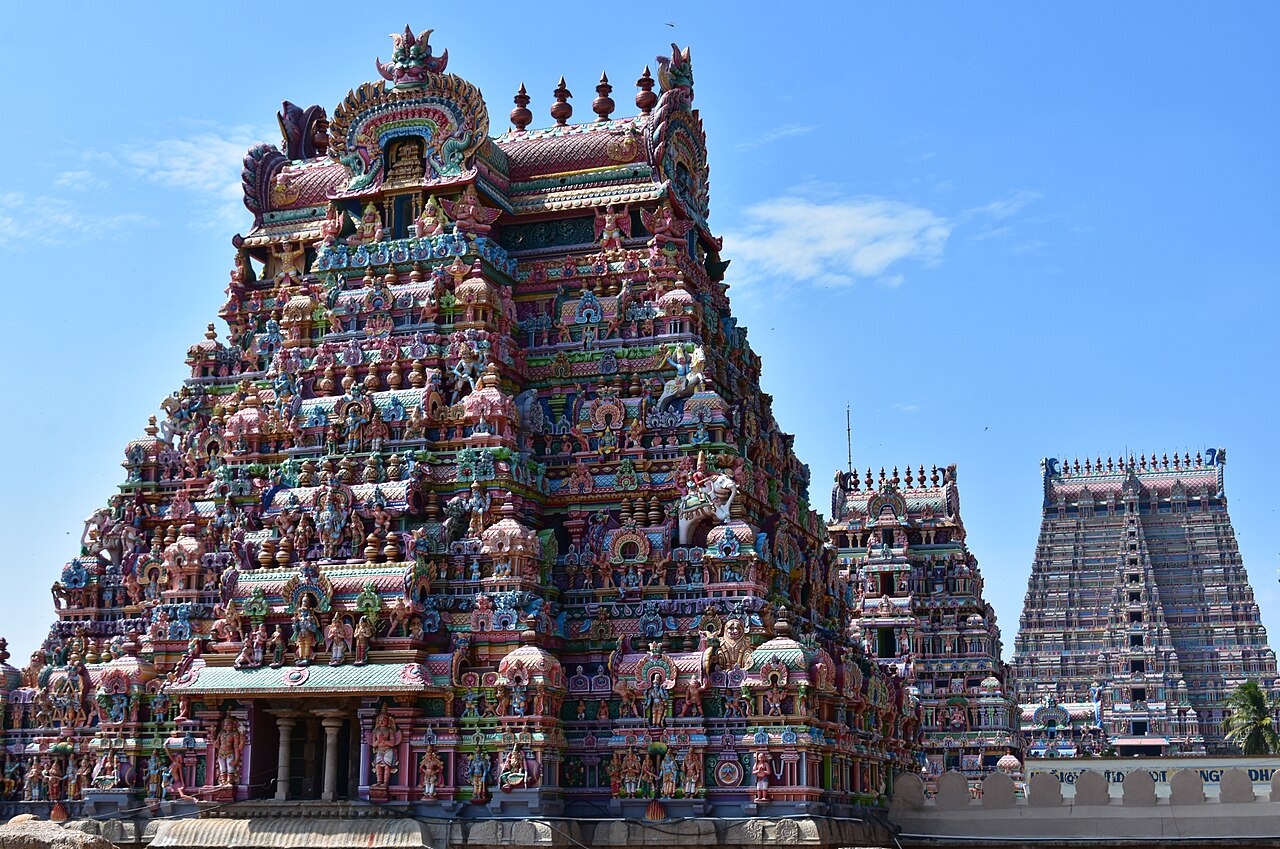
The Neervanna Perumal Temple at Thiruneermalai, near Pallavaram, is a unique Divya Desam comprising two shrines: Neervanna Perumal at the base of the hill and Sri Ranganatha atop it. The name is explained through the term Thoyagiri (Thothadri): thoya means water and adri or giri means hill, for the mount was once encircled by water, giving the site the name Thiru-neer-malai, the sacred water hill. The Lord manifests here in four postures: Neervanna Perumal standing (also called Neelamugil Vannan), Narasimha seated, Ranganatha reclining upon Adisesha at the hilltop, and Ulagalanda Perumal (Trivikrama) in walking stance. The principal legend concerns Thirumangai Alvar, who came to worship but found the hill surrounded by water; he waited six months until the waters receded before ascending, and his dwelling came to be called Thirumangai Alwarpuram. Sage Valmiki is also traditionally said to have worshipped three of the forms before receiving the darshan of Lord Rama here. The temple was sung by Thirumangai Alvar in nineteen pasurams and by Bhutathalvar in one, in the Divya Prabandham. The vimanas include the Ranga Vimanam over Ranganatha, the Santha Vimanam over Narasimha, and the Thoyagiri Vimanam over Ulagalanda Perumal. The sacred tanks include the Kshetra, Karunya, Siddha, and Swarna Pushkarinis.
Mangalāśāsanam — the Āḻvār pāsurams
The Lord Neervanna Perumal (hilltop: Ranganatha) with Animamalar Mangai (Ranganayaki) of Thiruneermalai (Toyagiri Kshetram) is glorified in 20 pāsurams by:
Thiruneermalai (Toyagiri / Thothadri Kshetram), near Pallavaram in the Thondai Nadu region, is a rare Divya Desam where Sriman Narayana is worshipped in all four sacred postures: Neervanna Perumal standing at the foot of the hill, and atop the hill Santha Narasimha seated, Ranganatha reclining on Adisesha, and Ulagalandha Perumal (Trivikrama) in walking stance. Two Alvars sang its mangalasasanam, contributing 20 pasurams in all. Thirumangai Alvar gives the principal glorification: a full decad of ten pasurams, Periya Thirumozhi 2.4 (the padhigam beginning "anRu Ayar kulak kodiyOdu"), each verse closing with the refrain "idam mAmalaiyAvadhu nIrmalaiyE" — "the great hill that is His abode is Thiruneermalai." The opening verse 2.4.1 is celebrated for naming the four postures together (ninRAn / irundhAn / kidandhAn / nadandhAn) across His abodes and declaring Thiruneermalai supreme among them. Tradition holds that when Thirumangai Alvar came to worship, he found the hill encircled by water and waited six months on a facing hill (remembered as Thirumangai Alwarpuram) until the waters receded before ascending to sing. The Mudhal Alvar Bhoothathalvar contributes one verse, Irandam Thiruvandhadhi 46 ("payinRadhu arangam thirukkOtti..."), which lists Thiruneermalai — "aNi thigazhum sOlai aNi nIrmalai," beautiful Neermalai amid lovely groves — among the abodes (alongside Srirangam, Thirukkottiyur and Thiruvengadam) where the Lord permanently resides, contrasting His enduring archa presence with His temporary avatars. The remaining Thirumangai verses counted in the total of nineteen arise from references to Thiruneermalai in his other prabandhams, including the Madal works.
anRu Ayar kulak kodiyOdu aNi mAmalar mangaiyodu anbu aLavi / avuNarkku endhAnum irakkam ilAdhavanukku uRaiyum idamAvadhu / irum pozhil sUzh nanRu Aya punal naRaiyUr thiruvAli kudandhai thadam thigazh kOval nagar / ninRAn irundhAn kidandhAn nadandhARku idam mAmalaiyAvadhu nIrmalaiyE
The Lord who, lovingly united with Nappinnai (the tender creeper of the cowherd clan) and with the beautiful lotus-seated Lakshmi, yet shows no mercy to the asuras, dwells in His various abodes. He who stands (at Thirunaraiyur), sits, reclines (at Thirukkudandhai) and walks (Trivikrama at Thirukkovalur) across these shrines surrounded by groves and waters — His supreme great hill of abode is Thiruneermalai. This opening verse of the decad is famous for naming the four postures together, mirroring the four forms enshrined at Thiruneermalai.
kANdA vanam enbadhu Or kAdu amararkku araiyan adhu kaNdavan niRka munE / mUNdu Ar azhal uNNa munindhadhuvum adhu anRiyum mun ulagam poRai thIrththu / ANdAn avuNan avan mArvu agalam ugirAl vagir Aga munindhu ariyAy / nINdAn kuRaL Agi nimirndhavanukku idam mAmalaiyAvadhu nIrmalaiyE
He who let the blazing fire consume the Khandava forest (sacred to Indra, king of the devas) before his very eyes; who in earlier ages relieved the earth of its burden; who in fury became the lion (Narasimha) and split open the broad chest of the asura Hiranya with His claws; and who grew tall as Trivikrama after appearing as the dwarf Vamana — the great hill that is the abode of that Lord is Thiruneermalai.
pichcham siRu pIli pidiththu ulagil piNam thin madavAr avar pOl anganE / achcham ilar nAN ilar AdhanmaiyAl avar seygai veRuththu aNi mAmalar thUy / nachchi namanAr adaiyAmai namakku aruL sey ena uL kuzhaindhu Arvamodu / nichcham ninaivArkku aruL seyyum avaRku idam mAmalaiyAvadhu nIrmalaiyE
Renouncing the ways of the shameless and fearless (such as the Jain ascetics who carry small peacock-feather fans), the true devotees scatter beautiful flowers in worship and, melting within in loving devotion, pray daily: 'Grant us Your grace, that we may never fall into the grasp of Yama.' The great hill that is the abode of the Lord who bestows His grace upon such devotees is Thiruneermalai.
payinRadhu arangam thirukkOtti pannAL / payinRadhuvum vEngadamE pannAL / payinRadhu aNi thigazhum sOlai aNi nIrmalaiyE / maNi thigazhum vaN thadakkai mAl
The great Lord (Mal), whose generous broad hands shine like sapphire, has long dwelt at Thiruvarangam (Srirangam) and Thirukkottiyur; for many days at Thiruvengadam (Tirupati); and at the beautiful Thiruneermalai, radiant amid its lovely groves. Bhoothathalvar lists Thiruneermalai among the abodes where the Lord permanently resides in His archa form, in contrast to His temporary avatars.
pugar Ar uruvAgi munindhavanaip pugazh vIda munindhu uyir uNdu asuran ... nigar Ayavan nenju idandhAn avanukku idam mAmalaiyAvadhu nIrmalaiyE
The Lord who, in radiant fury as Narasimha, destroyed the demon (Hiranya) so that even his name was erased, and tore open the chest of the asura — the great hill that is the abode of that Lord is Thiruneermalai. (Only the opening and refrain of the exact Tamil were confirmed from the source; the full verbatim middle text was not captured, so Tamil is left blank to avoid error; transliteration shown is partial.)
Tamil text & meaning sourced from divyaprabandham.koyil.org and other Śrī Vaiṣṇava authorities — please cross-check the linked source for the canonical reading.
Read the pāsurams ↗Gallery


Tap an image to view it larger — use ‹ › to browse, ✕ to close. Images via Wikimedia Commons.
Plan your visit
📍 12.96368, 80.11469
Routes, distances, hotels and restaurants open in Google Maps with live data. Build a phased pilgrimage plan →