Vijayasana Perumal Temple
Thiruvaragunamangai
Ssriram mt · CC BY-SA 4.0 · source
One of the Nava Tirupati, associated with Chandra (the Moon).
Sthala Purāṇam
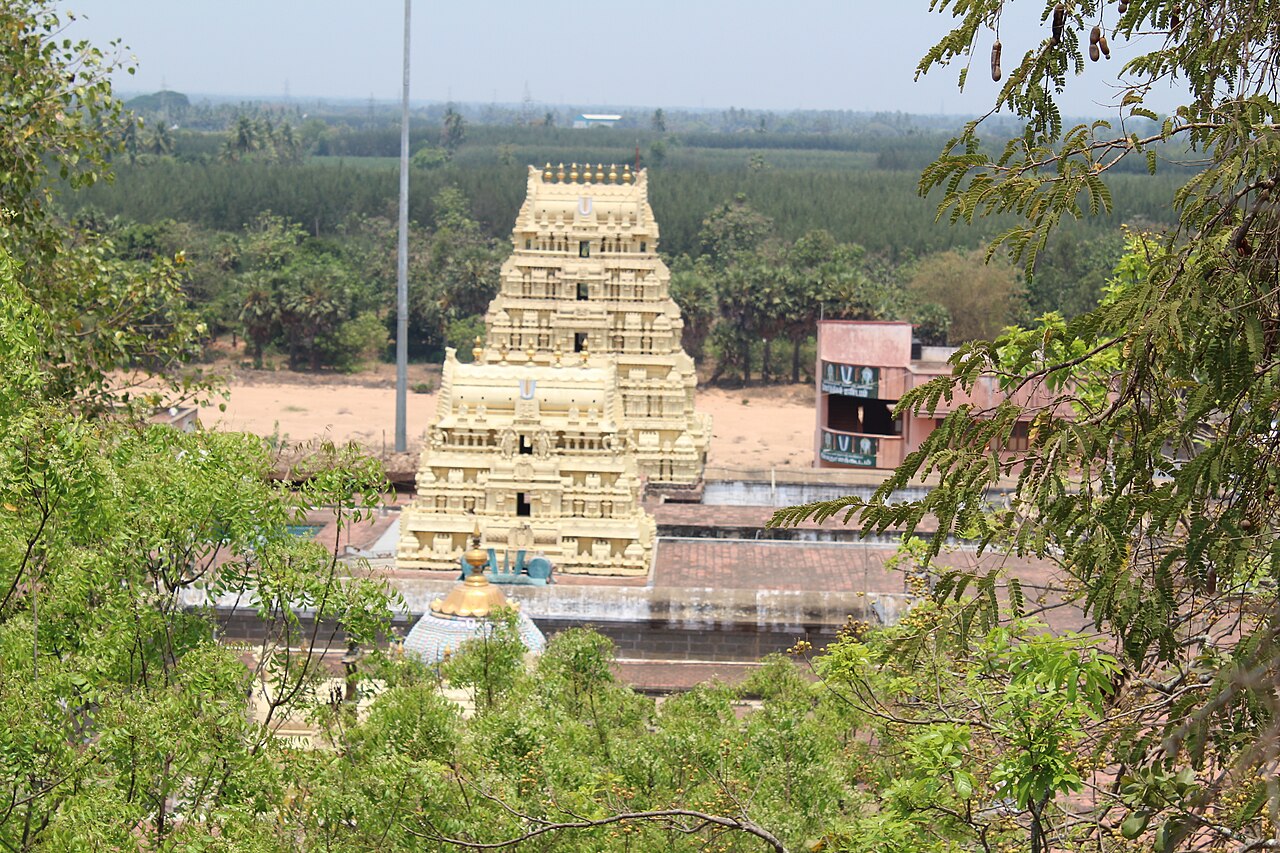
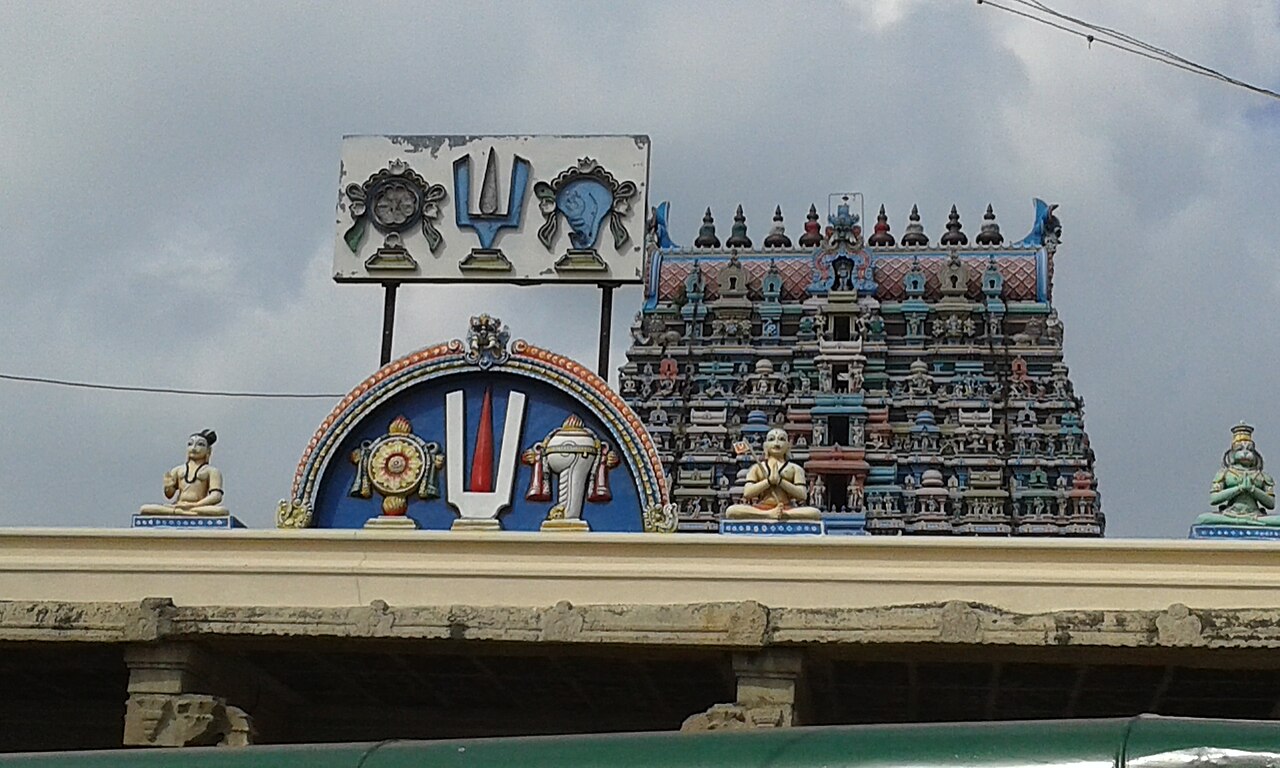
Thiruvaragunamangai, the second of the Nava Tirupati, lies at Natham near Srivaikuntam on the Thamiraparani in Thoothukudi district. The presiding deity is Vijayasanar (Vijayasana Perumal), Vishnu in a seated (asana) posture, with his consort worshipped as Varagunavalli (Lakshmi). The sthala puranam preserves two accounts of the Lord's manifestation. In the principal Sri Vaishnava narrative, a Brahmin sage named Vedavith, who had devotedly served his aged parents on the Thamiraparani bank, longed for the darshan of Maha Vishnu after their death. Vishnu appeared to him in the guise of an old Brahmin and directed him to Varagunamangai as the ideal place for penance. There Vedavith performed severe tapas chanting the Asana mantra; pleased with his devotion, Vishnu appeared, granted him moksha, and consented to remain at the spot as Vijayasanar in the seated form the sage requested. Another version credits the long penance of the sage Romesar (Romasa), who performed tapas for several thousand years before Vishnu granted his prayer. Within the Nava Tirupati's scheme, in which the nine Vishnu temples are identified with the Navagrahas, Varagunamangai is the Chandra (moon) sthalam, hence also called Chandran Sthalam. The temple is built in the Dravidian style with a gopuram gateway tower. Nammalvar consecrated it through his Mangalasasanam in the Tiruvaymoli, and during the great Vaikasi Garuda Sevai festival the Alvar's idol is processed on the Anna Vahanam while his pasurams for each of the nine Thamiraparani shrines are chanted.
Mangalāśāsanam — the Āḻvār pāsurams
The Lord Vijayasanar with Varagunavalli Thayar of Thiruvaragunamangai is glorified by:
Thiruvaragunamangai (Varagunamangai), the Vijayasana Perumal Temple at Natham near Srivaikuntam on the Thamiraparani in Thoothukudi district, is the second of the Nava Tirupati and the Chandra (Moon) sthalam. The Lord is Vijayasanar, worshipped seated (asana posture), with his consort Varagunavalli. Among the twelve Alvars, it received mangalasasanam from Nammalvar alone, in his Thiruvaymoli (the fourth thousand of the Nalayira Divya Prabandham). Its definitive verse is Thiruvaymoli 9.2.4 (\"puLingudik kidandhu\"), which belongs to the decad 9.2 centered on the neighbouring Thiruppulingudi. In this single celebrated pasuram Nammalvar glorifies three adjacent Thamiraparani Divya Desams together by the Lord's three iconic postures: reclining (kidandhu) at Thiruppulingudi, seated (irundhu) at Thiruvaragunamangai, and standing (ninRu) at Srivaikuntam. The Alvar pleads with the Lord — who has entered his clarified heart never to leave — to come forth and grant darshan, his coral-red lips glowing like a creeper against a rain-bearing cloud, while the three worlds marvel and the devotees dance in celebration. During the great Vaikasi Garuda Sevai of the Nava Tirupati, Nammalvar's idol is processed and his pasurams for each of the nine Thamiraparani shrines are chanted. NOTE: the temple should not be confused with SriVaramangai / Vanamamalai (Nanguneri), the subject of the unrelated Thiruvaymoli decad 5.7 (\"nORRa nOnbilEn\"); that decad is NOT about Varagunamangai and was excluded.
puLingudik kidandhu varaguNamangai irundhu vaigundhaththuL ninRu / theLindha en sindhai agangazhiyAdhE ennai ALvAy enakkaruLi / naLirndha sIr ulagam mUnRudan viyappa nAngaL kUththAdi ninRArppa / paLingu nIr mugilin pavaLampOl kanivAy sivappa nI kANa vArAyE
O Lord who enslaved me by reclining (kidandhu) at Thiruppulingudi, sitting (irundhu) at Thiruvaragunamangai, and standing (ninRu) at Srivaikuntam! Having entered my clarified heart and never leaving it, granting me your special grace — to the amazement of all three cool worlds, while we dance and roar in joyous celebration, your coral-red lips glowing like a creeper against a water-laden dark cloud — pray come forward so that I may see and enjoy you. This single, celebrated pasuram performs mangalasasanam of three adjacent Thamiraparani Divya Desams at once through the Lord's three postures, with Thiruvaragunamangai glorified as the abode where He is seated (irundhu).
Tamil text & meaning sourced from divyaprabandham.koyil.org and other Śrī Vaiṣṇava authorities — please cross-check the linked source for the canonical reading.
Read the pāsurams ↗Plan your visit
📍 8.63706, 77.92414
Routes, distances, hotels and restaurants open in Google Maps with live data. Build a phased pilgrimage plan →