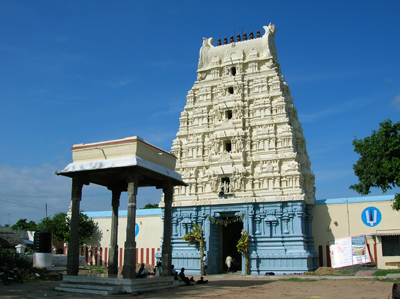
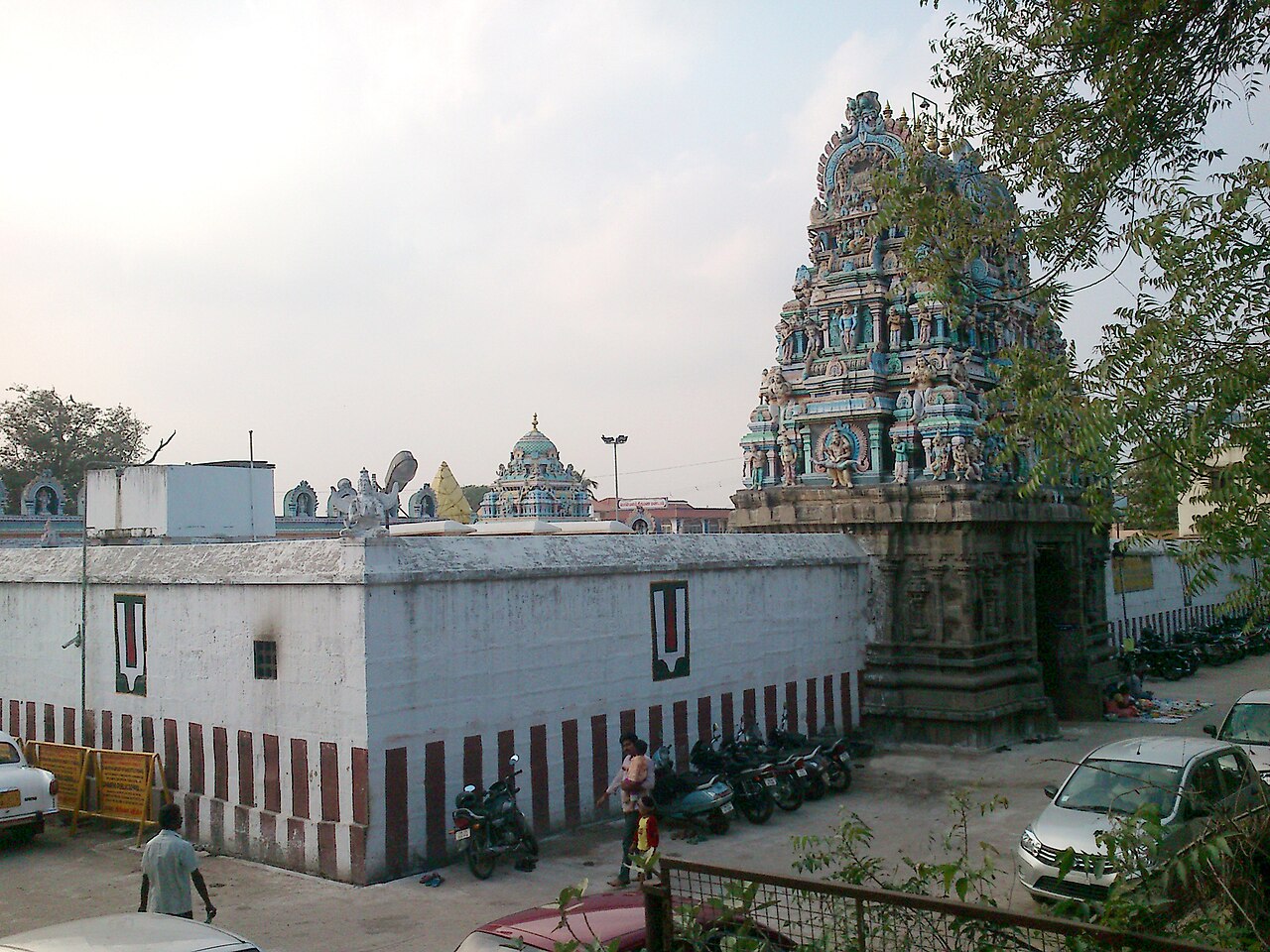
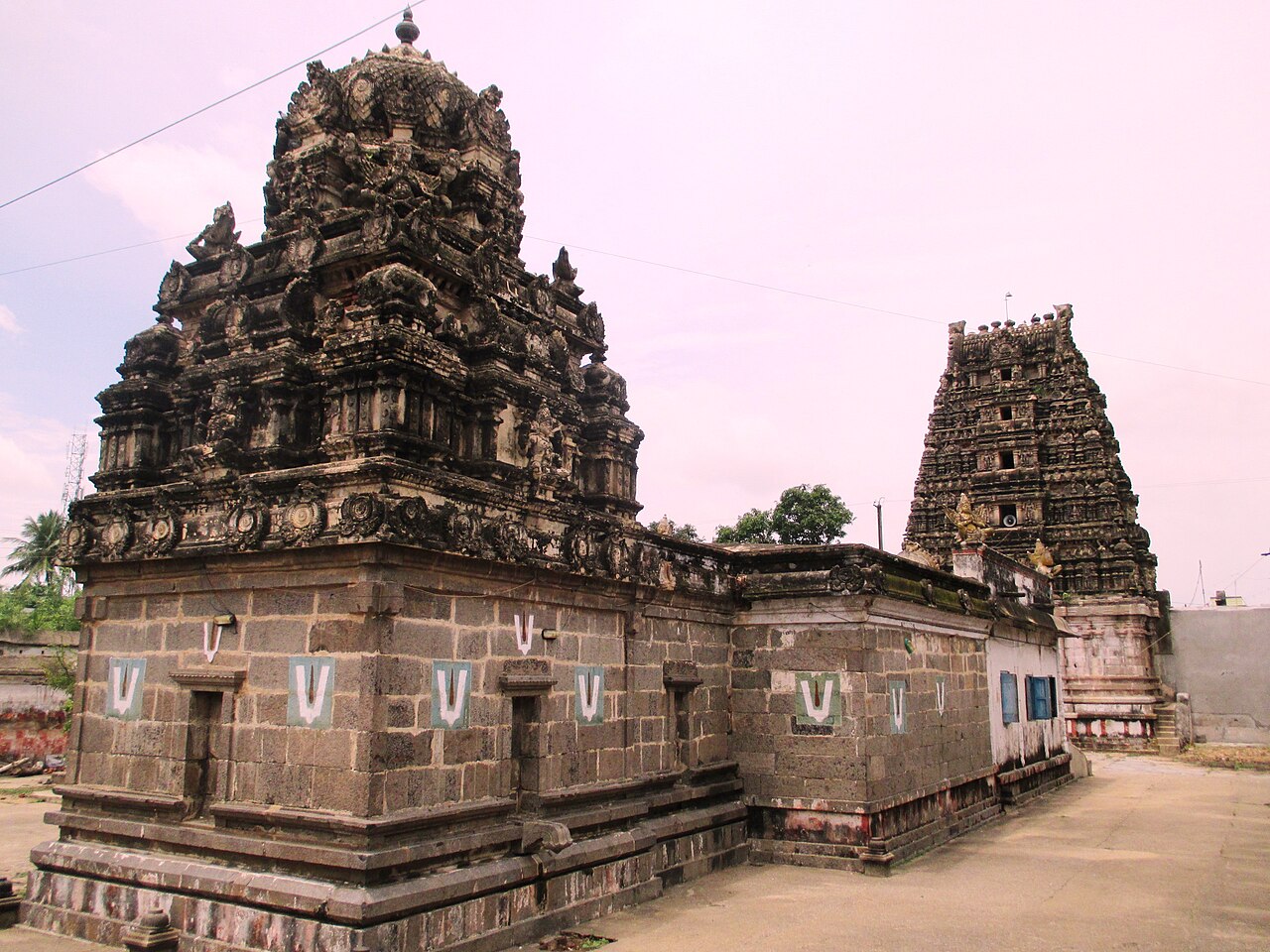
Veeraraghava Perumal Temple, Thiruvallur
Thiruvevvul (Veeksharanya)
Ssriram mt · CC BY-SA 4.0 · source
ஒரு நோய்தீர்க்கும் திருத்தலம், இங்கு பக்தர்கள் நோயுற்ற உடல் உறுப்புகளின் வடிவில் செதுக்கப்பட்ட உலோகத் தகடுகளைக் காணிக்கையாக அர்ப்பணிக்கின்றனர்; இது அஹோபில மடத்தால் நிர்வகிக்கப்படுகிறது.
Sthala Purāṇam
திருவள்ளூரில் அமைந்துள்ள வீரராகவ பெருமாள் கோயில், பண்டைக் காலத்தில் திருவெவ்வுள் (திரு எவ்வுள்) என அழைக்கப்பட்டது, தொண்டை நாட்டுத் தொகுதியைச் சேர்ந்த ஒரு Divya Desam ஆகும். இங்கு விஷ்ணு வீரராகவ பெருமாளாக, ஆதிசேஷன் என்னும் அரவணையில் புஜங்க சயன நிலையில் பள்ளிகொண்டு, கனகவல்லி Thāyār (வசுமதி) என்னும் தேவியுடன் வழிபடப்படுகிறார். மார்க்கண்டேய புராணத்திலிருந்து எடுக்கப்பட்ட Sthala Purāṇam-இன்படி, விஷ்ணுவின் சிறந்த அடியாரான சாலிஹோத்திர முனிவர் இங்கு வாழ்ந்து, அரிசி மாவை அரைத்து அதில் பாதியை ஏழைகளுக்கு அளித்து மீதியைத் தம்மிடம் வைத்துக்கொண்டு பேரளவில் தான தர்மம் செய்து வந்தார். உணவு வேண்டி ஒரு அந்நியர் வந்தபோது, முனிவர் தம்மிடமிருந்த உணவுப் பொருட்கள் அனைத்தையும் அவருக்கு அளித்தார்; அந்த விருந்தாளி அந்த இடத்திலேயே பள்ளிகொண்டு, தம்மை விஷ்ணுவாக வெளிப்படுத்தி, இந்த சுயநலமற்ற அடியாரை வாழ்த்தினார். இந்நிகழ்விலிருந்தே இவ்விடத்தின் பெயர் தோன்றியது; ஏனெனில் இறைவன் தமிழில் 'எவ்வுள்' அதாவது 'எங்கு பள்ளிகொள்வது' என்று வினவினார் என்பர், இவ்வாறே இது திரு எவ்வுள் ஊர் ஆகி, பின்னர் திருவள்ளூர் ஆயிற்று. இறைவன் காய்ச்சல் உள்ளிட்ட நோய்களையும் உடல் வியாதிகளையும் தீர்ப்பவர் என நம்பப்படுவதால், அவர் தெய்வீக மருத்துவராக வைத்திய வீரராகவ சுவாமி எனப் போற்றப்படுகிறார். இக்கோயிலில் லக்ஷ்மி நரசிம்மர், ஹனுமான், Āḻvār-கள் மற்றும் ராமானுஜரும் எழுந்தருளியுள்ளனர். புனித தீர்த்தம் ஹ்ருத-தாப-நாசினி எனப்படும்; இதில் நீராடுவோரின் மனக்கவலையும் உடல்நோயும் தீரும் என நம்பப்படுகிறது, கருவறையின் விமானம் விஜயகோடி விமானம் எனப்படும், இது அசுரர்மீது வெற்றியைக் குறிக்கிறது. இக்கோயிலை Thirumangai Āḻvār மங்களாசாசனம் செய்தார்; பல்லவர், சோழர், நாயக்கர் ஆகியோரின் ஆதரவையும் இது பெற்றது.
Mangalāśāsanam — the Āḻvār pāsurams
The Lord Veeraraghava Perumal (Vaidya Veeraraghava Swamy) with Kanakavalli (Vasumathi) Thayar of Thiruvevvul (Veeksharanya) is glorified in 12 pāsurams by:
திருவள்ளூரில் அமைந்துள்ள வீரராகவ (வைத்திய வீரராகவ) பெருமாள் கோயில் — தொண்டை நாட்டின் Divya Desam ஆகிய திருவெவ்வுள் (வீக்ஷாரண்யம்) — Nālāyira Divya Prabandham-இல் Thirumangai Āḻvār மற்றும் Thirumazhisai Āḻvār ஆகியோரால் போற்றப்படுகிறது. இக்கோயிலின் மரபுவழி Mangalāśāsanam பன்னிரண்டு pāsuram-களைக் கொண்டது. Thirumazhisai Āḻvār தம் Naanmugan Thiruvandhadhi (பாசுரம் 36) இல் திருவெவ்வுளை இறைவன் பள்ளிகொண்டருளும் தலங்களுள் ஒன்றாகச் சேர்க்கிறார், Thirumangai Āḻvār தம் Periya Thirumozhi-இல் இங்குள்ள இறைவனைப் போற்றிப் பாடுகிறார். கிருஷ்ணாவதாரத்தில் பாண்டவர்களின் தூதனாக (dhoothan) செயல்பட்ட இங்கு பள்ளிகொண்ட இறைவன், நோய்களைத் தீர்ப்பவராக ('வைத்திய வீரராகவன்') போற்றப்படுகிறார்.
காசை ஆடை மூடி ஓடிக் * காதல் செய்தான் * அவன் ஊர் நாசம் ஆக நம்ப வல்ல * நம்பி நம் பெருமான் ** வேயின் அன்ன தோள் மடவார் * வெண்ணெய் உண்டான் இவன் என்று * ஏச நின்ற எம் பெருமான் * எவ்வுள் கிடந்தானே
kAsai Adai mUdi Odik * kAdhal seydhAn * avan Ur nAsam Aga namba valla * nambi nam perumAn ** vEyin anna thOL madavAr * veNNey uNdAn ivan enRu * Esa ninRa em perumAn * evvuL kidandhAnE
The Lord who, complete in valour, vowed to destroy Ravana's city; the same Lord who, unable to resist the butter held by the bamboo-shouldered gopis, stole and ate it and so stood there being scolded by them. That Lord of mine reclines at Thiruvevvul.
தையலாள்மேல் காதல் செய்த * தானவன் வாள் அரக்கன் * பொய் இலாத பொன் முடிகள் * ஒன்பதோடு ஒன்றும் ** அன்று செய்த வெம் போர் தன்னில் * அங்கு ஓர் செஞ்சரத்தால் உருள * எய்த எந்தை எம் பெருமான் * எவ்வுள் கிடந்தானே
thaiyalAL mEl kAdhal seydha * thAnavan vAL arakkan * poyyilAdha pon mudigaL * onbadhOdu onRum ** anRu seydha vembOr thannil * angu Or senjaraththAl uruLa * eydha endhai emperumAn * evvuL kidandhAnE
Ravana, the sword-bearing demon who lusted after Sita (the lady); in the fierce war of that day, my Father and Lord shot a single red arrow that sent rolling Ravana's ten unfailing golden-crowned heads. That Lord of mine reclines at Thiruvevvul.
முன் ஓர் தூது * வானரத்தின் வாயில் மொழிந்து * அரக்கன் மன் ஊர் தன்னை * வாளியினால் மாள முனிந்து ** அவனே பின் ஓர் தூது * ஆதி மன்னர்க்கு ஆகி பெருநிலத்தார் * இன்னார் தூதன் என நின்றான் * எவ்வுள் கிடந்தானே
munnOr thUdhu * vAnaraththin vAyil mozhindhu * arakkan mannUr thannai * vALiyinAl mALa munindhu ** avanE pinnOr thUdhu * Adhi mannarkkAgi peruNilaththAr * innAr thUdhan ena ninRAn * evvuL kidandhAnE
He who, in the Rama-avatara, first sent a message through the mouth of the monkey (Hanuman) and in wrath destroyed the demon-king's city with His arrows; and who, in the Krishna-avatara, then went Himself as the messenger of the foremost (Pandava) kings, so that the people of this vast earth knew Him as 'the messenger of so-and-so' - that very Lord reclines at Thiruvevvul.
nAgaththaNaik kudandhai vehkAth thiruvevvuL / nAgaththaNai arangam pEranbil nAgath / thaNaip pARkadal kidakkum Adhi nedumAl / aNaippAr karuththan AvAn
Thirumazhisai Alvar declares that the primordial, boundless Lord (Adi Nedumaal) reclines upon the serpent-couch (Adisesha) at Thirukkudandhai, Thiruvekka, Thiruvevvul (Tiruvallur), Thiruvarangam, Thirupper (Koviladi), Thiruvanbil, and the Milk-Ocean (Thirupparkadal), in order to enter and dwell in the hearts of those devotees who long to embrace Him. (This verse simultaneously sanctifies Thiruvevvul and Thiru Vekka.)
More verses & references (1)
- Thirumangai Alvar performs Mangalasasanam to the reclining Lord of Thiruvevvul, recalling that the Lord who served as the Pandavas' envoy in the Krishna avatara now graciously reclines at Tiruvallur for his devotees. Exact decade/verse reference not confidently sourced. — Thirumangai Alvar, Periya Thirumozhi · source ↗
Tamil text & meaning sourced from divyaprabandham.koyil.org and other Śrī Vaiṣṇava authorities — please cross-check the linked source for the canonical reading.
Read the pāsurams ↗Gallery


Tap an image to view it larger — use ‹ › to browse, ✕ to close. Images via Wikimedia Commons.
Plan your visit
📍 13.12310, 79.91200
Routes, distances, hotels and restaurants open in Google Maps with live data. Build a phased pilgrimage plan →