Nithyakalyana Perumal Temple, Thiruvidanthai
Thiru Ida Venthai (Nithya Kalyanapuri)
Ssriram mt · CC BY-SA 4.0 · source
The renowned temple for marriage prayers, owing to the legend of the Lord's daily (eternal) wedding.
Sthala Purāṇam
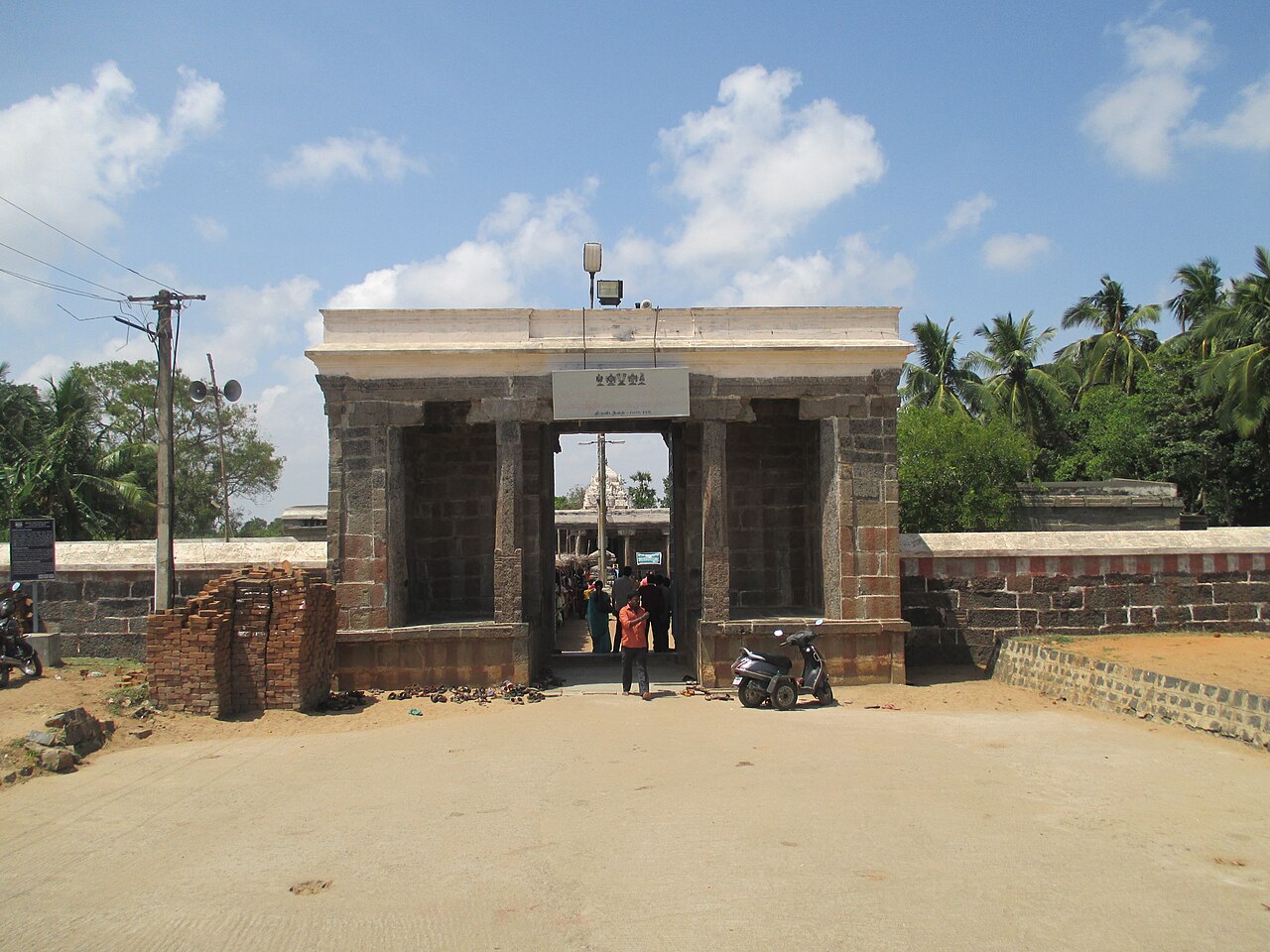
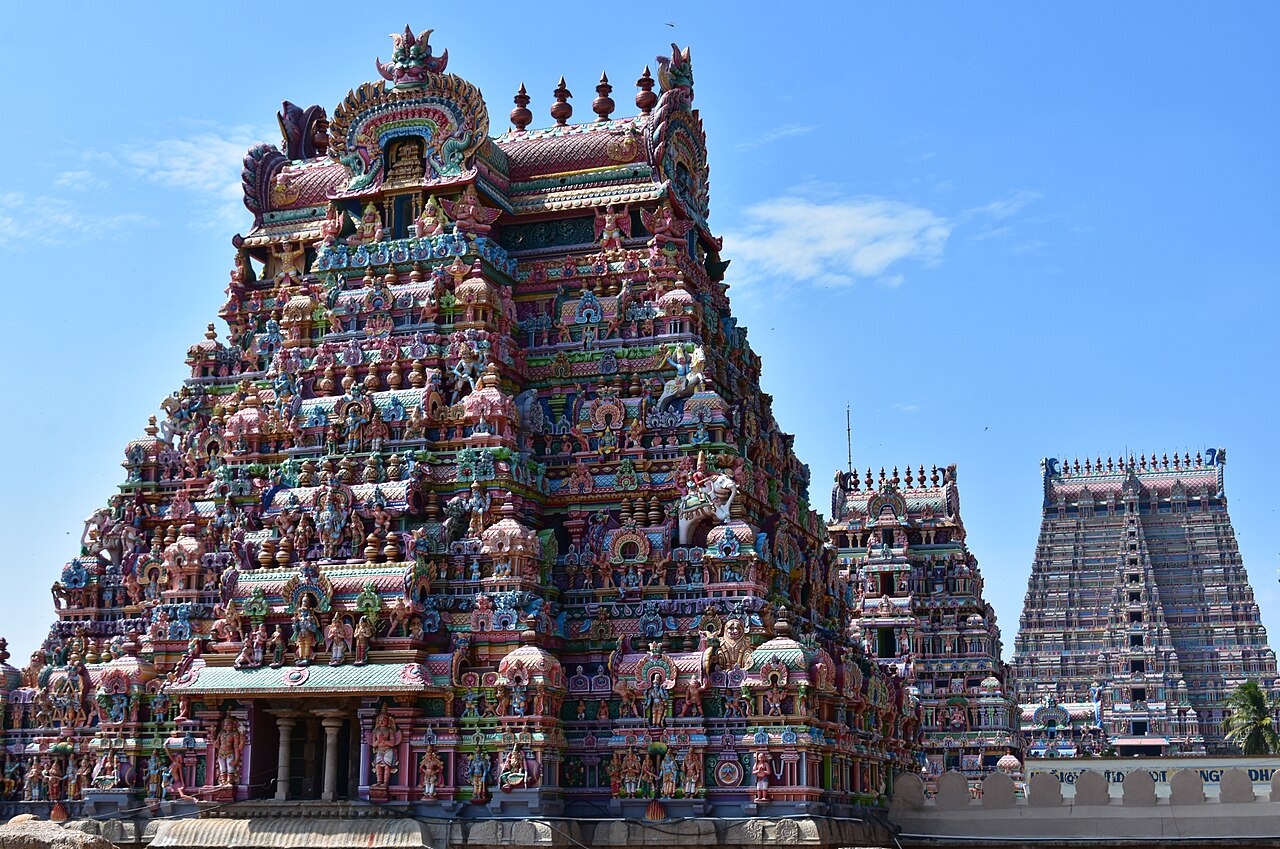
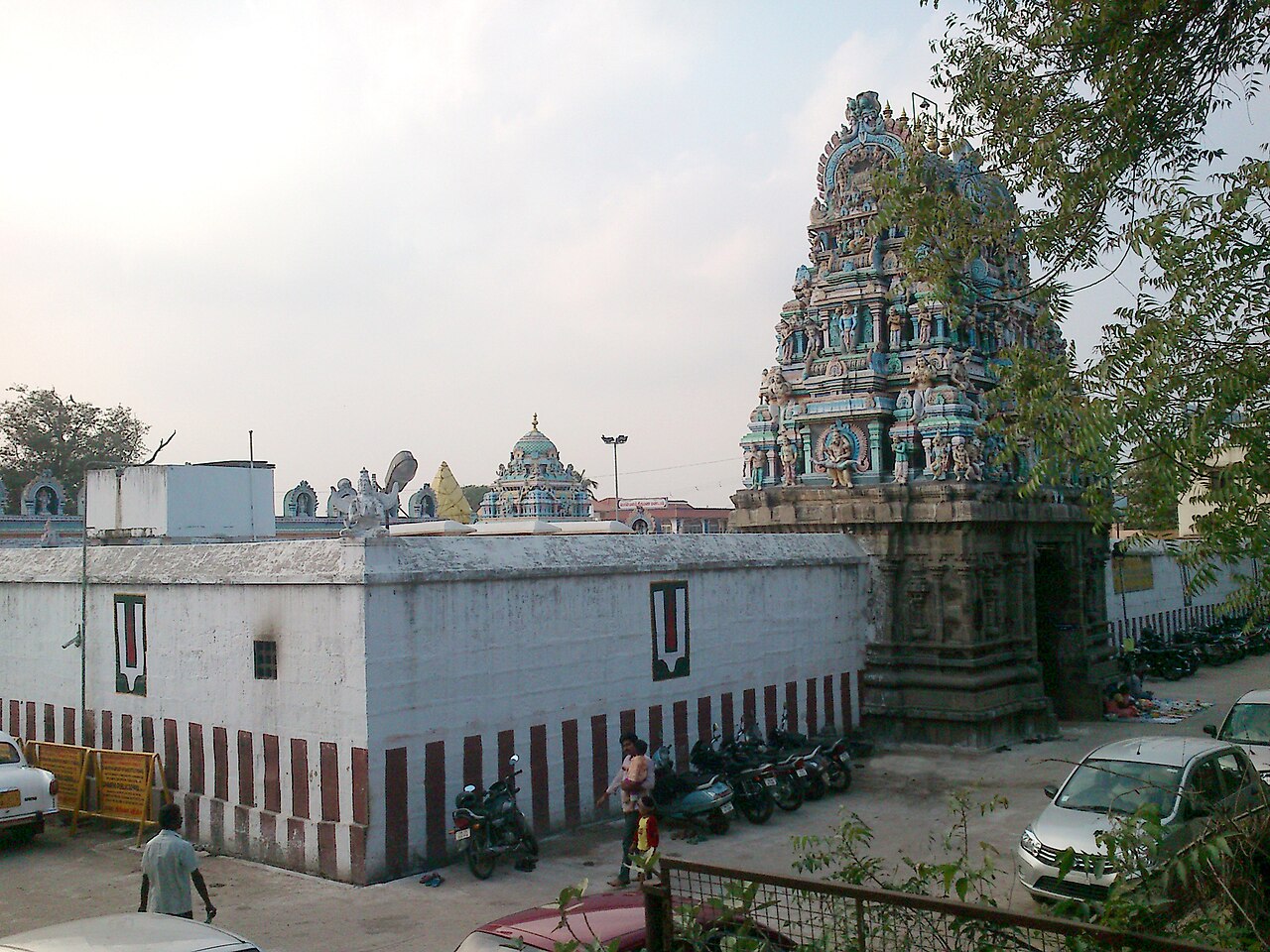
The Nithyakalyana Perumal Temple at Thiruvidanthai (Thiru Ida Venthai), in Chengalpattu along the East Coast Road, is reckoned among the 108 Divya Desams. The presiding deity is Lakshmi Varaha, Vishnu in his boar (Varaha) incarnation, shown in the rare form with Bhudevi seated upon his lap, and known as Nithyakalyana Perumal. According to the sthala puranam, the sage Kalava (Galava) had three hundred and sixty daughters and wished them all wedded to Vishnu. In answer to a boon, Lord Varaha married one daughter each day across the year, three hundred and sixty marriages in all, and from this perpetual wedding he earned the name Nithyakalyana Perumal, the one whose marriage is eternal or daily. Because Lakshmi (Periya Pirattiyar) is held to have lived among these maidens and married the Lord here, the place is also called Sripuri, and being the site of the Varaha avatara, Varahapuri. The consort is worshipped as Komalavalli Thayar. The temple was glorified by Thirumangai Alvar in the Naalayira Divya Prabandham, who praised the powers of Komalavalli Thayar. The sanctum tower is the Kalyana Vimanam, and the temple tanks are the Kalyana Theertham, the principal tank facing the temple, and the Varaha Pushkarani near the northern wall. The original structure is attributed to the Pallavas, with inscriptions dated to 959 CE, and the shrine is especially revered for prayers seeking marriage.
Mangalāśāsanam — the Āḻvār pāsurams
The Lord Lakshmi Varaha Perumal (Nithyakalyana Perumal) with Komalavalli Thayar of Thiru Ida Venthai (Nithya Kalyanapuri) is glorified in 10 pāsurams by:
The Nithyakalyana Perumal Temple at Thiruvidanthai (Thiru Ida Venthai), a Divya Desam in Thondai Nadu on the East Coast Road in Chengalpattu district, enshrines Vishnu as Lakshmi Varaha (Nithyakalyana Perumal) in the rare form of the boar avatar with Bhudevi seated on his lap, with Komalavalli Thayar as consort. The shrine received the mangalasasanam of Thirumangai Alvar, who sang a single decad of ten pasurams — Periya Thirumozhi 2.7 (verses 2.7.1 to 2.7.10), the decad beginning 'thivaLum' — in its praise within the Nalayira Divya Prabandham. This matches the temple record of 10 pasurams by Thirumangai Alvar. The decad is cast in the akam (love) mode: the Alvar speaks in the voice of the mother of Parakala Nayaki (his feminine persona), describing the heroine's overwhelming, lovesick longing for the Lord of Idavendhai and repeatedly imploring the Lord — 'idavendhai endhai pirAnE' (O Lord of my clan in Thiruvidaventhai) — to grant a word of grace. The opening verse acknowledges Sri Mahalakshmi eternally on the Lord's chest yet affirms the soul's irrepressible desire for His feet; later verses invoke His other forms (including his presence at Thirumalirunjolai). The concluding phalashruti verse names the Lord's avatars — Hamsa, Matsya, Kurma, Narasimha — promises that the Nithyakalyana Lord grants sweet grace to His devotees, and declares that those who recite Kaliyan's (Thirumangai Alvar's) songs will have the roots of their old karma destroyed.
thivaLum veNmadhi pOl thirumugaththu arivai / sezhum kadal amudhinil piRandha / avaLum nin Agaththu iruppadhum aRindhum / Agilum Asai vidALAl / kuvaLai am kaNNi kolli am pAvai / sollu nin thAL nayandhu irundha / ivaLai un manaththAl en ninaindhirundhAy? / idavendhai endhai pirAnE!
Even knowing that Periya Pirattiyar (Sri Mahalakshmi) — she of the radiant, moon-like beautiful face, born of the nectar that arose from the vast ocean — eternally resides upon Your divine chest, still my daughter (Parakala Nayaki) will not give up her longing for You. She has eyes lovely as the kuvalai blossom and the beauty of a doll fashioned on the Kolli mountain. O Lord of my clan who has come to dwell in Thiruvidaventhai (Idavendhai), what are You resolving in Your heart concerning this girl who yearns for Your divine feet? Speak but a word of grace.
uLam kanindhu irukkum unnaiyE pidhaRRum / unakku anRi enakku anbu onRu ilaLAl / vaLam kani pozhil sUzh mAlirunjOlai / mAyanE! enRu vAy veruvum / kaLam kani muRuval kArigai peridhu / kavalaiyOdu avalam sErndhirundha / iLam kani ivaLukku en ninaindhirundhAy? / idavendhai endhai pirAnE!
Her heart melted with love, she babbles only of You; she has not even a little love left for me, her mother who longed so to bear her. She cries out deliriously, 'O wondrous Lord who dwells in Thirumalirunjolai (Azhagar Koil) ringed with groves of sweet fruit!' This delicate young one, with a smile sweet as the kaLam fruit, sunk now in deep sorrow and pallor — O Lord of my clan in Thiruvidaventhai, what are You resolving in Your heart concerning her? Speak but a word of grace.
annamum mInum Amaiyum ariyum / Aya em mAyanE! aruLAy / ennum in thoNdarkku in aruL puriyum / idavendhai endhai pirAnai / mannu mA mAda mangaiyar thalaivan / mAna vEl kaliyan vAy oligaL / panniya panuval pAduvAr nALum / pazha vinai paRRaRuppArE
To the sweet devotees who pray, 'O our wondrous Lord who took the forms of the swan (Hamsa), the fish (Matsya), the tortoise (Kurma) and the lion-man (Narasimha) — bestow Your grace!', the Lord Nithyakalyana who dwells eternally in Thiruvidaventhai grants His sweet mercy. Upon that Lord, Kaliyan (Thirumangai Alvar), chieftain of the Thirumangai land of enduring great mansions and bearer of the broad-bladed spear, has fashioned these songs with his own lips. Those who recite this garland of verses, moved by love, will day by day cut away the very roots of their ancient karma.
Tamil text & meaning sourced from divyaprabandham.koyil.org and other Śrī Vaiṣṇava authorities — please cross-check the linked source for the canonical reading.
Read the pāsurams ↗Gallery


Tap an image to view it larger — use ‹ › to browse, ✕ to close. Images via Wikimedia Commons.
Plan your visit
📍 12.76331, 80.24200
Routes, distances, hotels and restaurants open in Google Maps with live data. Build a phased pilgrimage plan →